
For many autistic travelers, knowing what to expect can make an unfamiliar journey feel more manageable.
That preparation is especially important when a trip includes several different stages, such as arriving at the airport, going through security, boarding an aircraft, collecting luggage, traveling to a resort and settling into a new environment.
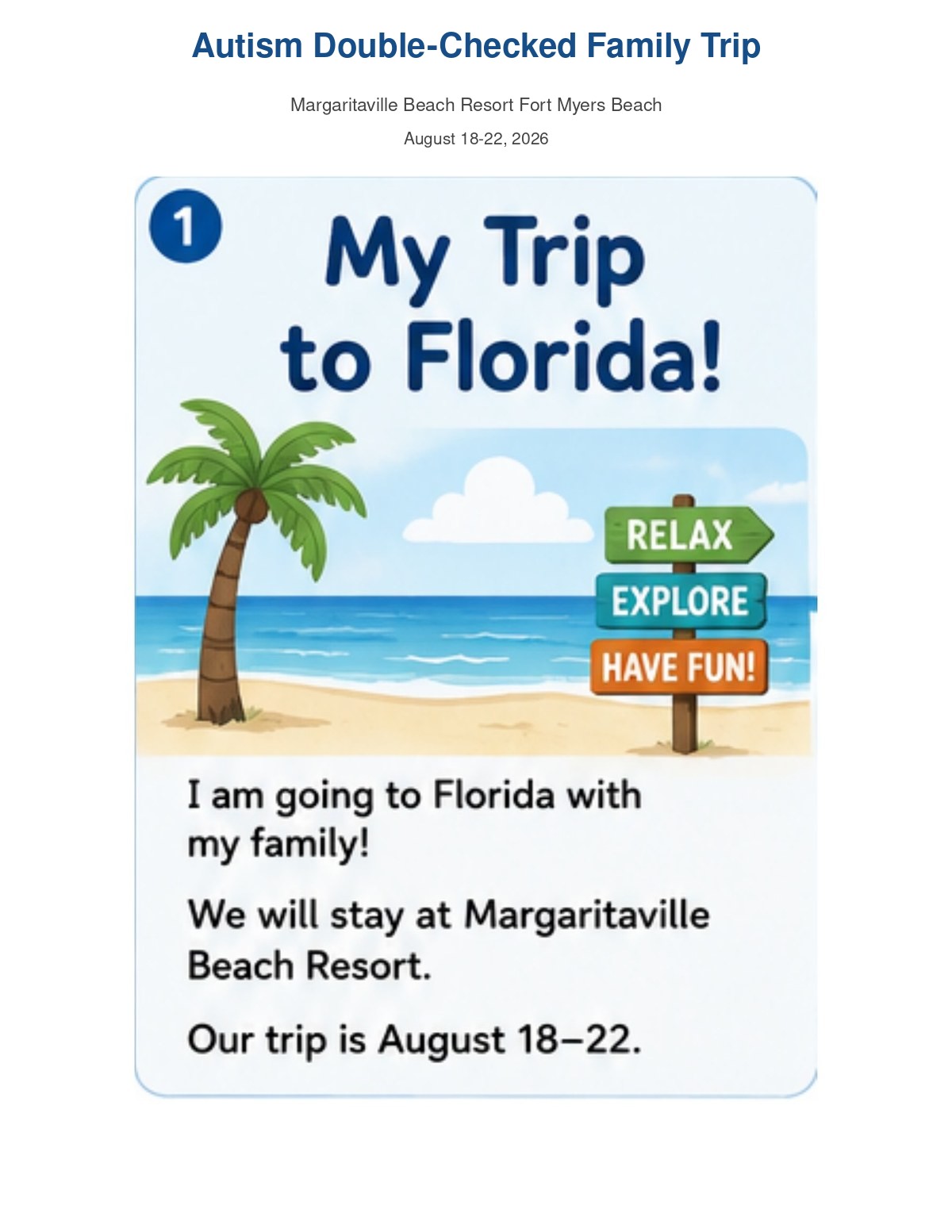
As families prepare for the upcoming Autism Double-Checked family trip to Margaritaville Beach Resort Fort Myers Beach from August 18 through 22, ADC Certified Travel Advisor Rachel Morelli of Travelmation has created a visual guide to help participating families preview their experience before leaving home.
An ADC Certified Travel Experience
This special family trip brings together several Autism Double-Checked Certified travel partners:
- Bradley International Airport
- Breeze Airways
- Margaritaville Beach Resort Fort Myers Beach
- ADC Certified Travel Advisor Rachel Morelli with Travelmation
Certification helps ensure that participating travel providers have made a commitment to better understanding and supporting autistic travelers. It also gives families access to information and resources that can help them prepare before they travel.
Rachel’s visual guide brings the different parts of this particular journey together in one clear, family-friendly resource.
Previewing the Journey
The guide walks families through the anticipated sequence of the trip, beginning with their arrival at Bradley International Airport.
Using short sentences, images and visual symbols, it previews experiences such as:
- Checking in at the airport
- Going through security
- Boarding the Breeze Airways aircraft
- Choosing familiar activities during the flight
- Collecting luggage and traveling to the resort
- Seeing the hotel room and getting settled
- Exploring the pool, beach and other resort areas
- Participating in planned activities
- Taking a break when needed
- Eating together at the resort
- Packing, returning to the airport and traveling home
The guide also includes several important reminders:
- Some things may be new or different.
- Plans can change.
- It is okay to ask for help.
- Travelers can take a break.
- Families can enjoy the experience in the way that works best for them.
These messages help prepare travelers not only for the planned itinerary, but also for the flexibility that travel sometimes requires.
Select the cover image or view Rachel’s complete Visual Guide.
Visual guide created by ADC Certified Travel Advisor Rachel Morelli of Travelmation for families participating in the August 2026 Autism Double-Checked family trip.
Why Visual Preparation Can Help
Visual guides can make an upcoming experience more concrete. Instead of asking someone to imagine an unfamiliar airport, aircraft, hotel or activity, families can show them what the experience may look like and explain the likely sequence in advance.
When my autistic son was young, I created similar guides before our family trips. I included pictures of the airports, hotels, attractions and other places we expected to visit, along with photos of relatives who would be joining us. Because saying goodbye to people and places was often difficult for him once he had become comfortable in a new environment, I also included a reminder that at the end of the vacation, it would be time to say goodbye and return home. Each guide ended on a positive note by reminding him that we could look forward to another trip in the future. Reviewing the guide helped make the experience feel more familiar and predictable.
Every autistic traveler is different, and a visual guide will not serve every person in the same way. Some travelers may want to review it repeatedly, while others may prefer to look at only a few key parts. The content and level of detail should be based on the individual traveler’s communication style, interests and needs.
Creating a Visual Guide for Your Own Trip
Families do not need special software to create a useful visual travel guide. A document, presentation or collection of printed pages can work well.
Consider including the following:
1. Show the sequence of the trip
Break the journey into clear stages. This might include packing, leaving home, arriving at the airport, checking in, going through security, boarding, arriving at the destination and traveling to the hotel.
2. Use current, recognizable images
Whenever possible, use photographs of the actual airport, airline, aircraft, hotel and destination. Photos you have taken or images that travel providers make available for trip planning may help the traveler recognize important places upon arrival. If you will be meeting relatives or friends, consider including their photos as well so the traveler knows who will be part of the experience.
3. Keep the language clear and direct
Use short sentences that explain what is likely to happen. Avoid including unnecessary details that could make the guide feel overwhelming.
4. Include choices and support strategies
Show what the traveler can do if they need support. Examples might include wearing headphones, bringing a preferred activity, asking for help, taking a quiet break or choosing not to participate in every activity.
5. Acknowledge that plans can change
A visual guide should provide structure without promising that every detail will happen exactly as shown. Including a reminder that times, activities or plans may change can help prepare the traveler for some flexibility.
6. Involve the traveler
When possible, ask the autistic traveler what information they would like included. They may have questions or concerns that other family members have not considered.
7. Prepare for saying goodbye
The end of a trip can be a difficult transition, especially after the traveler has become comfortable in a new place or spent meaningful time with family and friends. Consider including a reminder that the trip will end and that it will be time to say goodbye. Ending the guide with something positive to anticipate, such as looking at trip photos or planning another adventure, may also help.
8. Confirm the details
Review the guide shortly before departure to make sure flight information, transportation arrangements, operating hours and planned activities remain accurate.
Additional Ways to Prepare
A visual guide is one of several tools families can use when planning a trip.
The Autism Double-Checked Directory of Certified Providers helps families identify airports, airlines, hotels, resorts and travel professionals that have committed to supporting autistic travelers.
Families can also use the Autism Passport to communicate a traveler’s individual needs, preferences and sensitivities to participating travel providers before the trip begins.
Preparation cannot remove every unexpected moment from travel. However, it can give autistic travelers and their families more information, more ways to communicate and greater confidence as they approach a new experience.
We look forward to sharing more about this special family trip after the travelers return.